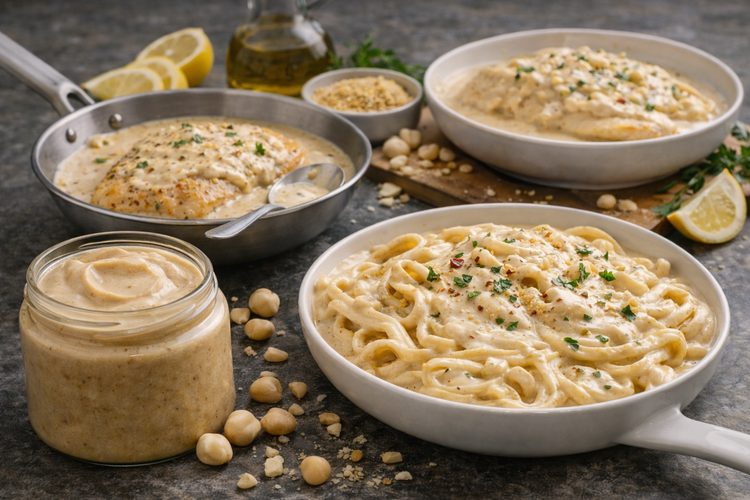
Macadamias in sauce systems matter because industrial ingredient buying is rarely only about nominal price. In sauce development, the stronger commercial result usually comes from aligning ingredient form, target texture, fat behavior, packaging and shipment timing before the order is placed. For premium applications, macadamias are not only a flavor input. They are a structural input that changes how the sauce feels, flows, emulsifies and is perceived by the end user.
That is why a specification-minded brief is especially important. A manufacturer using macadamias in a spoonable sauce, a dip-like sauce, a pourable culinary base or a premium retail jarred sauce may all be using the same nut family, but they are not buying the same thing. The commercial logic changes with the finished viscosity, the amount of visible nut character, the desired smoothness, the storage route and the target price position.
Why macadamias are interesting in sauce systems
Macadamias bring a distinctive combination of mild richness, creamy mouthfeel and premium flavor perception. In many applications they help create a sauce that feels rounder, fuller and more indulgent than a standard starch-thickened or low-cost nut-based system. They can support premium savory sauces, gourmet dressings, creamy plant-based culinary bases, finishing sauces, chef-style spooning sauces and jarred retail concepts where a luxury pantry position is part of the strategy.
Commercially, they are useful when the buyer wants the sauce to communicate more than simple functionality. The nut can support a “premium,” “gourmet,” “chef-inspired,” “luxury,” or “plant-based creamy” message depending on how the formula is built and how the product is packed and sold.
In macadamia sauce systems, flavor, fat and texture should be treated as one combined design problem. The same ingredient choice that improves richness can also influence viscosity, oil release, spread of flavor, storage performance and consumer perception of quality.
How this topic shows up in real buying decisions
For macadamia sauce systems, the quote should reflect the real format and route. Whole kernel is different from meal, extra fine flour, smooth paste, nut butter or oil. The commercial logic also changes when the material is raw, pasteurized, lightly roasted or more developed roasted. A raw input may suit a cleaner sauce base that is processed further in-house. A roasted input may suit a sauce where nut character should be obvious in the finished taste profile.
For macadamia buyers, the usable product menu can include raw macadamias, pasteurized macadamias, dry roasted macadamias, oil roasted macadamias, macadamia meal, fine flour, butter-style paste and macadamia oil. Which format makes sense depends on whether the customer is manufacturing a sauce base, scaling a dip-like system, formulating a gourmet retail jar, preparing foodservice packs or planning export distribution.
Flavor: defining the nut contribution correctly
Flavor is often the first reason buyers consider macadamias, but it should be described more precisely than simply “nutty.” Macadamias can contribute buttery, creamy, mildly sweet and rounded notes, and the intensity varies with processing condition and usage level. Some formulas need the macadamia to be a gentle background support that softens herbs, dairy notes, garlic, peppers or spice systems. Others want it to be a signature flavor that defines the product.
That difference changes the quote request. If the sauce should taste primarily like truffle, herb, chili, roasted vegetable or umami seasoning with macadamia functioning as a richness layer, a lighter-format ingredient may make more sense. If the product should clearly present as a macadamia sauce or premium nut-based culinary system, a more deliberate roast or a more concentrated paste route may be more appropriate.
Fat: why macadamia richness matters commercially
Fat behavior is central to macadamia sauce performance. The richness of the nut can improve lubricity, mouth-coating, body and premium perception, but it also influences the way the sauce handles during processing and storage. In some systems, this is an advantage because the sauce gains a more indulgent texture without needing the same reliance on other fat sources. In other systems, the buyer may need tighter control over separation behavior, sheen, stability after filling or performance through storage.
That is why Atlas would encourage buyers to state whether the sauce needs to be pourable, spoonable, pumpable, hot-fillable, refrigerated, ambient, retail-jar stable or used quickly in a foodservice environment. Those details help determine whether the macadamia should be approached as a flavor-rich particulate base, a smooth paste input, or part of a broader emulsion system.
Texture: body, smoothness and visible character
Texture is where many macadamia sauce projects either become commercially compelling or become difficult to scale. Some customers want a very smooth, refined sauce with almost no particulate feel. Others want a lightly textured, artisanal or chef-style finish with visible nut character. Others want a body-building ingredient that contributes creaminess while the rest of the formula determines the final appearance.
Buyers should therefore define whether they want a fine-smooth system, a medium-smooth spreadable sauce, a lightly textured spooning sauce or a rustic nut-forward culinary format. A request for “macadamia sauce ingredient” is not enough on its own. The real commercial answer depends on the desired final texture and the route used to reach it.
Raw, pasteurized and roasted formats in sauce development
Raw macadamias are often relevant when the manufacturer wants maximum control over grinding, hydration, thermal treatment or flavor layering. Pasteurized formats may be useful when the customer wants a more ready-to-process ingredient while still preserving flexibility in downstream flavor design. Roasted formats can deliver a stronger nut note and a warmer flavor identity, which may suit premium savory sauces, luxury spreads and chef-oriented lines.
The choice is not only technical. It is also commercial. A roasted route may help justify premium positioning more quickly in the finished product, while a raw or lightly treated route may provide broader formulation flexibility. The best choice depends on what the product is trying to be in the market.
Common macadamia ingredient forms in sauce systems
Different sauce types benefit from different forms of macadamia input:
- Whole kernels: often used by processors who want full control over wet grinding, roast treatment or in-house conversion.
- Macadamia meal: useful in blended systems where texture and body are built gradually and the customer is not seeking an ultra-smooth finish from the start.
- Extra fine flour: more relevant where the customer wants a finer dispersion and less visible particulate effect.
- Macadamia butter or paste: often the most direct option for smooth premium sauces, dips and jarred spreads.
- Macadamia oil: useful when flavor and mouthfeel need support but the product does not require full nut solids as the primary structural base.
Each of these formats changes the likely cost structure, formulation flexibility and handling behavior of the sauce system.
How macadamias influence emulsion and mouthfeel logic
In many sauce systems, the commercial value of macadamias comes from the way they help create a fuller, smoother and more luxurious mouthfeel. They can add perceived richness and weight even when used at controlled levels. That makes them particularly relevant in gourmet savory sauces, plant-based creamy systems, nut-based culinary emulsions and premium finishing sauces.
However, buyers should not assume that macadamia input automatically creates the desired finished emulsion. The surrounding formula, process method and pack style still matter. The sourcing discussion should therefore include what the customer expects the macadamia to do in the system: thicken, round out flavor, contribute shine, increase body, support spoonability or improve premium eating quality.
Applications where macadamia sauce systems work well
Macadamias can be commercially effective in multiple sauce categories. These include premium savory sauces for plated foods, creamy culinary bases, chef-style spooning sauces, high-end dips that sit close to sauce formats, gourmet pasta or vegetable sauces, premium sandwich spreads, luxury condiment systems, plant-based creamy sauces and retail jarred specialty lines.
What connects these use cases is that the buyer is usually seeking more than basic functionality. They want a premium feel, a more refined texture or a richer flavor note that can help the finished product stand apart in foodservice or on shelf.
Blending macadamias with other ingredients
Most commercial sauce systems do not rely on macadamias alone. They may be combined with other nuts, seeds, oils, dairy components, seasonings, vegetable bases, starches or culinary inclusions. This is often the most practical route because it allows the formulator to tune cost, viscosity, flavor intensity and storage behavior.
From a sourcing standpoint, buyers should still define whether macadamias are intended to be the primary premium base or a secondary component. That affects what format is most sensible to quote. A macadamia-led gourmet sauce and a blended nut-vegetable culinary sauce may both use macadamias, but they do not require the same ingredient route.
Packaging and route-to-market considerations
Packaging plays a larger role in sauce systems than some buyers expect. Industrial bulk pails or lined containers for further manufacturing are very different from foodservice packs, retail-ready jars, squeeze bottles or export-oriented branded units. The same ingredient or sauce base can therefore have different commercial economics depending on how it is packed, stored and distributed.
This is why Atlas encourages buyers to define pack style early. Whether the program is industrial bulk, foodservice, retail-ready, private label or export-oriented can materially change packaging assumptions, labeling requirements, storage expectations and shipment cadence.
Storage, oxidation and shelf-life planning
Because macadamias are rich, storage planning matters in sauce systems. The buyer should consider how the product will be processed, filled, stored and consumed. A sauce used rapidly in foodservice may not need the same commercial planning as a retail or export product expected to sit through longer warehouse and distribution cycles. Oil behavior, flavor retention and appearance over time should be part of the initial commercial conversation rather than a later correction.
Programs that move well from trial to repeat replenishment often do so because the buyer defines realistic storage conditions, usage rhythm and shipment timing from the beginning. This usually leads to better continuity and fewer surprises in scaled production.
What Atlas would ask before quoting
Atlas encourages buyers to define intended use, texture target, pack style, destination, timeline and quality expectations early. Those inputs help reduce avoidable back-and-forth and improve comparability across California supply options. For sauce systems specifically, Atlas would usually ask whether the product is meant to be smooth or textured, whether the macadamia should be raw or roasted in flavor direction, whether the application is foodservice or retail, and whether the buyer needs an ingredient input or a more finished paste-style route.
In practical terms, the quote request works best when it includes target format, application, pack style, destination market and volume rhythm. Those five points usually bring the inquiry closer to a real quotation rather than a broad category discussion.
Commercial planning points
From a trading standpoint, the best sauce programs are built around repeatability. That means clear documentation, agreed packaging, sensible shipment cadence and a commercial structure that supports continuity rather than one-off emergency buying. Commercially, many projects move through a familiar sequence: trial quantity, validation run, launch volume and then repeat replenishment. This structure helps buyers confirm how macadamia flavor, fat and texture are performing in the real product before scaling further.
When relevant, the brief should also mention whether the program is domestic, industrial bulk, foodservice, retail-ready, private label or export-oriented. That one clarification often changes packaging, documentation and timing assumptions in material ways.
Buyer planning note
Atlas Global Trading Co. uses topics like this to move conversations from broad interest to a specification-minded inquiry. Macadamias in sauce systems work best when the buyer defines what the ingredient must do: support creaminess, add premium flavor, influence fat behavior, create a specific mouthfeel or strengthen the commercial position of the finished product.
If you are evaluating macadamias for savory sauces, creamy culinary systems, gourmet condiments, premium foodservice applications or export-oriented retail products, share the exact format, target texture, pack style, estimated volume and destination using the floating contact form so the next step can be grounded in a real commercial need.
Need help sourcing macadamias for sauce systems?
Use the contact form to turn this research topic into a practical quote request with format, texture target, packaging and shipment timing defined together.
- State the exact macadamia format and target sauce texture
- Add application, pack style and target monthly or trial volume
- Include destination market and timing requirements
Frequently Asked Questions
What should buyers specify first when evaluating macadamias for sauce systems?
Buyers should define the intended sauce application, target texture, ingredient format, roast profile, fat behavior, packaging style, destination market and volume rhythm. These details make quotations more practical and reduce mismatches between ingredient choice and finished product performance.
Why do flavor, fat and texture matter so much in macadamia sauce systems?
Macadamias influence more than flavor alone. They contribute creaminess, richness, mouthfeel, body and visual texture, which means the ingredient affects the full sensory and processing behavior of the sauce rather than serving as a simple background component.
Can macadamia sauce concepts be used for both domestic and export programs?
Yes. The same technical logic can apply to domestic, foodservice, retail-ready, private-label and export-oriented programs, but packaging, shelf-life management, documentation and freight assumptions may change depending on the channel and destination.