Define the cut family
Clarify whether you need visible kernels, a diced range or meal texture rather than using a broad walnuts request.
Buyer guidance on walnut cut definitions, size selection, meal texture behavior, application fit and buying decisions for California walnut programs.
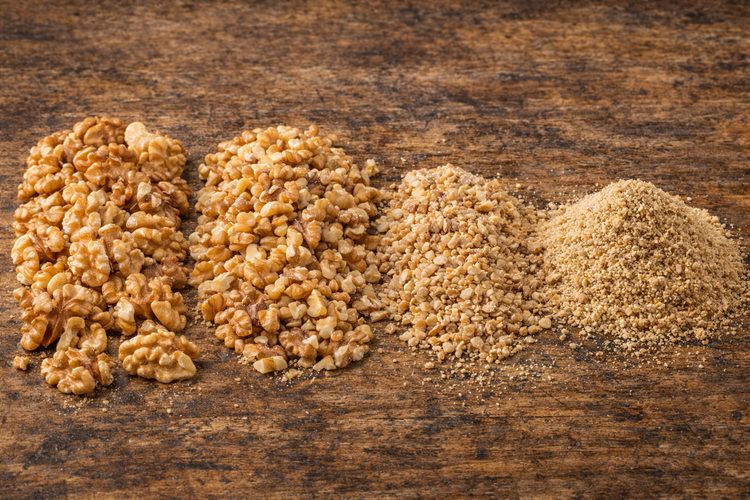
Specifying walnut cut style correctly matters because industrial nut buying is rarely only about nominal price. The stronger commercial outcome usually comes from aligning size range, appearance, process route, packaging and shipment timing before the order is placed. Buyers often begin with a broad request such as “walnut pieces,” “diced walnuts” or “walnut meal,” but those terms can still cover a wide range of actual particle behavior, visual outcomes and line performance.
In practice, walnut specification becomes more useful when the buyer defines what the ingredient needs to do rather than only what it is called. Does the product need visible premium kernel identity? Uniform particulate distribution through a cereal or confectionery system? Tighter depositor flow through a filling or topping line? More bakery-style crumb character in a cake or dessert base? The answer to those questions usually determines whether halves, pieces, diced cuts or meal are commercially correct.
Atlas approaches walnut cut discussions by treating size and texture as functional buying decisions. A more exact cut specification helps reduce sampling confusion, improves quote comparability and decreases the risk that a shipment technically matches the broad product name but does not work as intended in production.
For walnuts, cut style is not only a visual attribute. It affects processing efficiency, inclusion coverage, coating pickup, mixing behavior, settling, breakage visibility, depositor performance and the final consumer eating experience. A large visible kernel piece can create premium value in one application and create line problems in another. A fine meal can deliver smooth particulate integration in one system and create excessive density or oil behavior in another.
This is why industrial buyers usually get better results when they specify three things together: the broad cut family, the expected size range within that family and the intended functional behavior in the application. For example, “walnut pieces” is a broader commercial phrase, while “small diced walnut range for granola clusters” or “medium meal texture for cake filling body” is much more actionable.
Specification note: the same walnut ingredient name may mean different things to different suppliers unless the buyer also defines target particle behavior, intended use and acceptable variation. That is especially important for diced and meal styles.
In practical California walnut sourcing, buyers usually move among several broad format families:
This article focuses on the middle part of that decision tree: how buyers should think about kernel presentation, diced size range and meal texture when trying to make an application work commercially.
Kernel style matters most when the walnut is expected to remain visibly recognizable in the finished product. This includes premium snack mixes, retail nut blends, some bakery toppings, certain confectionery applications, salad or foodservice toppings, premium frozen dessert inclusions and some gift-oriented or export retail formats.
In those cases, the buyer may care about whether the shipment leans toward cleaner halves, pieces and halves, or another kernel presentation that preserves a strong visual walnut cue. The commercial question is not simply whether the product looks good in a sample tray. It is whether the chosen style supports the actual price point and application value of the finished product.
Many buyers over-specify visual identity when the walnut will later be reduced, coated, buried in a matrix or blended with other particulates. That usually increases cost without improving finished product performance. By contrast, under-specifying kernel style in a premium visible application can weaken the retail proposition or plating result. The correct choice depends on where the walnut creates visible value.
Diced walnut specifications become important when the application depends on a controlled size range rather than on large-kernel identity. This is common in bakery inclusions, granola, cereal, snack clusters, bars, confectionery centers, coated applications, premium fillings, frozen desserts and some foodservice prep systems. In these uses, buyers usually care less about exact half-kernel presentation and more about repeatable particle distribution.
The term “diced” may sound precise, but in practice it can still cover a commercially meaningful range. A coarser diced profile may create stronger texture contrast and more visible nut presence. A smaller diced profile may distribute more evenly, settle less in certain systems and give better control in portion-sensitive or depositor-sensitive applications. The buyer should therefore think in terms of intended line behavior and finished eating experience, not just the word “diced.”
For example, a granola producer may want a diced range that stays visible after baking and clustering without dominating the bite. A chocolate or confectionery buyer may want a tighter diced cut that coats or disperses evenly. A dessert system may need a medium-fine diced range that provides nut identity while staying smooth enough for layered filling applications. Those are different commercial problems and usually need different diced solutions.
Walnut meal is usually the correct route when the ingredient is no longer being chosen mainly for discrete visible pieces, but for body, distribution, flavor extension, texture support or bakery-style particulate character. Meal can be used in cakes, fillings, coatings, dessert systems, gluten-free applications, pastry bases, bakery compounds, confectionery layers and other systems where the formulator wants walnut solids to integrate more fully into the matrix.
However, meal texture is not one single behavior. Some applications need a relatively fine meal that behaves almost like a coarse flour extension. Others need a more textured meal that still contributes particulate identity. A meal that is too fine may create heaviness, oil expression or over-integration in some systems. A meal that is too coarse may disrupt depositor behavior or create a rougher mouthfeel than desired.
This is why “walnut meal” should usually be followed by application language. Meal for cake systems is not necessarily the same as meal for dessert fillings, crust-like components or compound bakery systems. The correct commercial choice depends on how much structure, visible particulate and integration the finished product needs.
In practice, buyers comparing walnut cuts are usually weighing several variables at once:
That is why the right walnut cut is rarely universal. The same diced style may work very well in a confectionery coating system and poorly in a premium snack cluster. The same meal may improve a cake formula but feel too dense in a delicate dessert filling. Good buying decisions come from mapping the cut to the real end use rather than choosing by label alone.
Halves and visually stronger kernel styles usually make sense in premium snack applications, foodservice toppings, visible frozen dessert inclusions, gift-oriented retail and some premium bakery decoration.
Medium diced styles are often used in granola, cereal, bakery inclusions, dessert toppings, snack clusters and confectionery applications where visible but manageable particle size is needed.
Smaller diced styles are often preferred where tighter distribution, easier coating, more controlled bite or depositor compatibility matter.
Meal textures are common in cakes, fillings, pastry systems, dessert bases, layered confectionery structures, crust-style applications and bakery systems that need nut solids without large visible pieces.
These are not rigid rules, but they are commercially useful starting points for writing a quote request.
Even when the main discussion is about cut style, process condition still changes the quote and the application fit. For walnuts, the commercial logic can change when the material is raw, pasteurized, dry roasted or oil roasted. Roast level can change brittleness, flavor intensity, surface oil behavior and how the cut behaves during coating, baking or storage. Raw-style cuts may suit manufacturers that want more in-house process control. Roasted styles may suit products needing immediate flavor impact or less internal processing.
That means size specification should not be written in isolation from process condition. A buyer asking for a diced range should also state whether the cut is intended to be raw for further processing, roasted for direct inclusion or matched to another defined production route.
No cut specification works well if the buyer expects perfect uniformity without saying what actually matters. The stronger approach is to define where variation is commercially acceptable and where it is not. For some applications, a little natural irregularity is fine because the product already has an artisanal or rustic character. For others, tighter range control matters because the line, depositor or retail appearance is sensitive.
In many industrial cases, it is better to define the intended cut family, the target range and the application risk if that range drifts too far. For example, an inclusion system may tolerate a small amount of finer material but not excessive oversize particles. A cake system may tolerate a softer texture range but not a meal that is so fine it changes batter density. Those commercial realities are more useful than abstract perfection language.
Buying note: if a walnut cut is process-sensitive, sample approval alone is often not enough. The buyer should also align on the target range, intended use and what level of variation is acceptable in commercial production.
Atlas encourages buyers to define intended use, cut family, pack style, destination, timeline and quality expectations early. For cut-driven walnut projects, that often means asking:
Those inputs help reduce avoidable back-and-forth and improve comparability across California supply options. They also help distinguish between a product that is technically walnut-based and one that is commercially right for the application.
From a trading standpoint, the best walnut cut programs are built around repeatability. That means clear documentation, agreed cut description, sensible shipment cadence and a commercial structure that supports continuity rather than one-off emergency buying. Cut-driven programs often benefit from a staged approach:
When relevant, the brief should also mention whether the program is industrial bulk, foodservice, retail-ready, private label or export-oriented. That single clarification often changes packaging, documentation and timing assumptions.
A common mistake is comparing walnut cuts only by nominal price without considering how the actual range behaves in production. A lower-cost diced cut may generate more fines, weaker coverage or poorer distribution. A cheaper meal may be too fine or too coarse for the intended system. A more expensive visible kernel style may not create meaningful value if the walnut will disappear into a blended product anyway.
The stronger commercial conversation is not “What is the cheapest walnut?” but “What is the most commercially efficient walnut cut that still performs correctly in the intended application?” That framing usually leads to better long-term buying decisions.
Atlas Global Trading Co. uses topics like this to move conversations from broad interest to a specification-minded inquiry. If you are evaluating walnut supply, share the target cut family, expected texture behavior, pack style, estimated volume and destination using the floating contact form so the next step can be grounded in a real commercial need.
For walnuts, more precise cut language usually creates better results than broad category language alone. Kernel style, diced range and meal texture each have a place, but the right choice comes from matching the cut to the finished product and the commercial route behind it.
Clarify whether you need visible kernels, a diced range or meal texture rather than using a broad walnuts request.
Bakery, confectionery, fillings, snacks, granola and dessert systems often need different walnut size behavior.
State whether you want visual identity, controlled particulate distribution, smooth integration or bakery-style body.
Industrial bulk, foodservice, retail-ready, private label and export-oriented programs can change pack and timing assumptions.
Use the contact form to turn this research topic into a practical quote request for Atlas. Include cut family, target size behavior, pack style, estimated volume and destination so the next step starts from a real technical and commercial requirement.
Because different walnut cuts behave differently in processing, appearance, depositor flow, topping coverage, particulate distribution and total delivered cost. A more exact cut specification usually produces a better commercial result than a generic walnut inquiry.
A useful walnut cut specification should include the target style such as halves, pieces, diced or meal, the preferred size range, the intended application, process condition, packaging style, destination market and expected volume rhythm.
Meal texture affects blendability, water interaction, mouthfeel, visible particulate character, depositor performance and how the walnut behaves in fillings, bakery systems, coatings and dessert applications.
Yes. Atlas uses the same topics covered in the academy to help buyers move from broad product interest to practical walnut cut, packaging and shipment discussions for domestic and export programs.