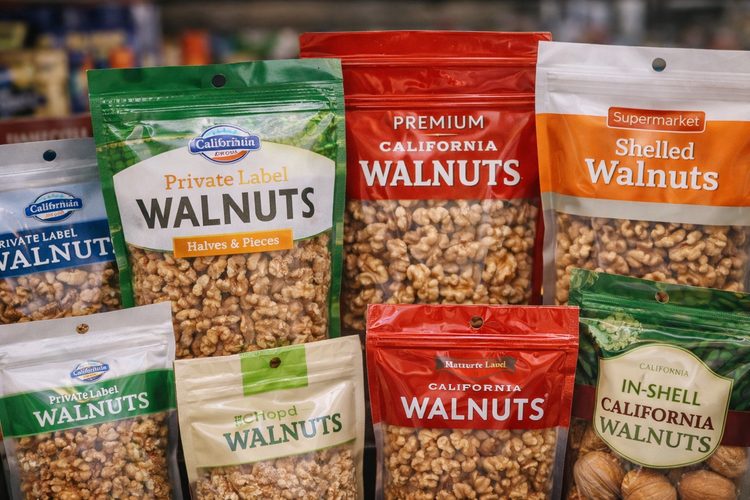
Retail walnut packs are not merely smaller versions of bulk walnut sales. Once walnuts move into consumer-facing packaging, the product becomes part ingredient, part merchandising asset and part brand statement. That changes the sourcing discussion. Buyers are no longer evaluating only walnut availability or unit price. They are also evaluating how the chosen walnut format will look on shelf, how it will communicate value, how it will support a premium or mainstream position, and how the packaging structure will perform through filling, distribution and retail handling.
For Atlas, retail walnut programs usually start with a simple question: what exact retail role should the walnut pack play in market? Is it an everyday value SKU, a premium natural snacking item, a better-for-you shelf offer, a festive gifting product, an export retail line or a private-label category entry? The stronger commercial outcome usually comes from aligning product format, pack style, label direction, target consumer price and shipment timing before the order is placed.
Why retail walnut strategy is different from industrial walnut buying
In industrial walnut buying, the end use often defines the format. In retail, the commercial logic becomes more layered because the final pack must satisfy both product performance and shelf positioning. A walnut half or kernel may be technically sound, but it may still be the wrong retail answer if the pack size, merchandising story, visual presentation or price point do not fit the intended market.
Retail walnut packs therefore sit at the intersection of sourcing, packaging, branding and route-to-market planning. The buyer is effectively building a small product architecture: format, pack weight, case structure, consumer message, positioning tier and replenishment model. That is why retail walnut programs work better when they are specified as commercial products rather than treated as a simple bulk-to-pack conversion.
Retail buyer framing: the right retail walnut pack is not only the right walnut. It is the right walnut in the right size, the right pack format, the right price ladder and the right shelf story for the intended channel.
How this topic shows up in real buying decisions
In practice, buyers comparing retail walnut programs often review several questions together. They compare raw, pasteurized, dry roasted and sometimes flavored or further processed retail concepts. They compare halves and pieces against more controlled kernel presentations. They assess whether the product should be positioned as natural snacking, pantry ingredient, better-for-you retail offer, premium nut gift pack or value everyday walnut line. The right choice depends on the balance between appearance, bite, labeling direction, total delivered cost and the price point the market will accept.
For walnuts buyers, the usable retail menu usually includes in-shell walnuts for certain traditional markets, raw walnut kernels, pasteurized walnuts, dry roasted walnuts and, in some channels, smaller processed or value-added options. Which of those makes sense depends on the end consumer, whether the product is sold through grocery, specialty retail, convenience, e-commerce, foodservice resale or export retail distribution.
Retail walnut format choices and why they change market position
Format is one of the most visible retail decisions because the consumer can often evaluate walnut quality at a glance. Larger halves and pieces usually signal premium quality and stronger visual value. More mixed kernel presentations may support a broader-value positioning. Roasted formats can suggest ready-to-eat convenience and snacking focus. In-shell formats can support gifting, seasonal trade or traditional market preferences. Each choice influences not only the product itself, but also what kind of brand story the pack can tell.
Common retail directions include:
- Raw kernels and halves: often used for natural, pantry and ingredient-led retail programs where consumers value visual quality and versatility.
- Pieces or mixed kernel styles: can work in value-oriented retail formats where price accessibility matters more than premium whole-piece presentation.
- Dry roasted walnuts: usually support snack-forward positioning and ready-to-eat consumer expectations.
- Flavored roasted walnuts: move further toward branded snacking and often require more active merchandising and stronger flavor identity.
- In-shell walnuts: remain relevant in certain gifting, festive and traditional trade channels.
The correct choice depends on where the product sits in the market and what the customer expects from the pack.
Pack format as a pricing and branding decision
Retail packaging is not only a technical container. It is also one of the main commercial levers in the category. Pack size influences affordability, trial rate, shelf presence, perceived value and whether the product is treated as an impulse snack, a pantry staple or a premium specialty purchase. A walnut program built around larger consumer units may support household ingredient use, while smaller packs may better suit on-the-go snacking, gifting or channel-specific merchandising.
From a trade standpoint, pack choice often determines much of the market position. A simple value pouch, a premium stand-up resealable pack, a branded box, a window carton or a gift-oriented format each send a different signal to the buyer and end consumer. That is why retail walnut packs are usually specified not only by weight but by role: entry-price, core shelf line, premium tier, festive line, export retail or private label.
Branding logic: natural, premium, value or lifestyle-led?
Retail walnut branding usually falls into one of several commercial lanes. Some programs position walnuts as a wholesome pantry ingredient. Others lean into premium California origin, visible kernel quality or culinary usage. Some are designed around value and accessibility. Others are built around lifestyle cues such as healthy snacking, natural food, premium gifting or specialty imported food sections.
The walnut format should reinforce that positioning. A premium-origin message generally pairs better with strong visual presentation and cleaner packaging execution. A value program may accept a more mixed kernel style if it preserves margin discipline and price competitiveness. A flavored snack line may rely more on pack design and seasoning concept than on premium whole-kernel appearance. This is why branding decisions should be tied directly to the underlying walnut format and not left until after sourcing.
Commercial insight: retail walnut branding works best when the pack makes the format believable. Premium copy on a weak visual format usually underperforms, while the right format can do much of the branding work itself.
Private label versus branded walnut retail programs
Private label walnut programs and branded walnut programs often use similar product families, but the decision criteria are not identical. In private label, retailer expectations around consistency, label compliance, case structure and price architecture are usually central. In branded programs, differentiation, identity and shelf communication may carry more weight. Both can be commercially strong, but the quote request should reflect which model is intended.
For private label, the buyer typically needs clarity on pack dimensions, label declarations, repeat specification control, retailer margin expectations and on-time replenishment. For branded programs, the focus may widen to include packaging finish, brand language, promotional flexibility and a more deliberate premium or lifestyle position. Atlas generally treats these as related but distinct commercial routes because the pack design and sourcing logic may differ.
Domestic versus export retail walnut packs
The same walnut format can sometimes work in both domestic and export retail, but the packaging and commercial logic often change. Export programs may require different language, market-specific declarations, labeling structures, unit conventions, transit protection and documentation. Shelf-life planning can also become more important where the route to market is longer or where the distributor structure adds more time between packout and sale.
This means a retail walnut pack should not be quoted without understanding the destination market. A domestic retail pouch may be commercially correct in one setting but unsuitable for an export program that requires different materials, case counts or compliance detail. Packaging, documentation and timing assumptions can all shift once export is involved.
Case packs, channel fit and shelf economics
Retail walnut programs are also influenced by channel economics. Grocery chains, specialty retail, discount formats, foodservice resale and e-commerce can all favor different pack structures. Some channels reward strong shelf block and price clarity. Others reward premium presentation, reseal features or giftable design. Case pack count, pallet efficiency and replenishment rhythm therefore matter more than many first-time buyers expect.
For example, a walnut pack positioned for mainstream grocery may need strong turnover and efficient case movement. A specialty line may tolerate slower movement if the premium is justified visually and commercially. Export retail may involve distributor handling that changes preferred case size and pack durability. These are not secondary logistics details; they are part of the product’s real commercial fit.
What Atlas would ask before quoting
For retail walnut projects, Atlas recommends translating the product idea into a quote request with several practical points. That usually makes the next discussion more precise and reduces avoidable back-and-forth. Atlas would typically want to understand:
- the target walnut format: in-shell, raw kernels, halves and pieces, mixed kernels, roasted or flavored retail-ready format,
- the intended market position: value, core shelf, premium, gifting, natural pantry, snacking or specialty retail,
- whether the program is branded, private label or export retail,
- the pack style and unit size required,
- the destination market and any export or labeling considerations,
- the expected volume rhythm: trial, launch quantity, recurring replenishment or seasonal campaign,
- the required timing and promotional calendar,
- any specific quality expectations related to appearance, kernel size, roast state or market claims.
These inputs help Atlas discuss realistic California partner options instead of treating the inquiry as a generic walnut price request. They also help determine whether the project should be framed as a straightforward retail pack, a private label line, a premium branded program or an export-oriented retail concept.
Commercial planning points
Retail walnut programs often develop in stages: sample review, packaging review, validation run, launch volume and repeat replenishment. That staged logic is useful because retail success depends on more than the walnut itself. Label layout, case structure, pack functionality, retail presentation and price ladder all need to work together. A technically acceptable walnut product may still need commercial adjustment before it becomes a strong retail SKU.
From a trading standpoint, the best retail programs are built around repeatability. That means clear documentation, agreed packaging, sensible shipment cadence and a commercial structure that supports continuity rather than one-off emergency buying. When relevant, the brief should also mention whether the program is industrial bulk for later packout, direct retail-ready, private label or export-oriented. That single clarification often changes packaging, documentation and timing assumptions.
Buyers should also compare total delivered retail value, not only walnut cost. The right pack and format may support better shelf presence, stronger margin logic, lower retail disruption and more believable market positioning. Those benefits often matter more than a narrow raw material cost difference when the product is consumer-facing.
Buyer planning note
Atlas Global Trading Co. uses topics like this to move conversations from broad interest to a specification-minded inquiry. If you are evaluating retail walnut packs, share the target format, pack style, branding direction, estimated volume and destination using the floating contact form so the next step can be grounded in a real commercial need.
Whether the requirement is mainstream retail, premium gifting, private label, export retail or snack-led walnut packs, the same principle applies: retail walnuts work better when product format, intended application, packaging and commercial timing are defined together.
Need help sourcing around this retail walnut topic?
Use the contact form to share your product, packaging, destination and timing requirements for a practical quotation.
- State the exact walnut format and retail pack style
- Add target monthly or trial volume
- Include destination market, price tier and target timing
Frequently Asked Questions
What is the main buyer takeaway from “Retail Walnut Packs: Format, Branding and Market Position”?
The main buyer takeaway is that retail walnut programs work best when product format, pack architecture, price point, branding direction and commercial timing are defined together rather than treated as separate decisions.
Which walnut format usually works best in retail packs?
There is no single best retail format for every market. Buyers usually compare halves and pieces, kernels, chopped walnuts, roasted walnuts and in-shell options depending on channel, target consumer, price ladder, visual goals and market position.
Can this topic be applied to both U.S. and export retail programs?
Yes. The same retail-pack logic applies to domestic and export walnut programs, although labeling, packaging materials, case configuration, documentation and shelf-life assumptions may vary by destination.